How I Found My Urban Oasis: The AC Hotel Seattle Downtown That Didn’t Break My Budget
Last spring, I had one of those moments that makes you question your entire budget travel philosophy. I was standing in the lobby of the AC Hotel Seattle Downtown, looking around at the sleek marble surfaces and modern art installations, double-checking my booking confirmation because surely there was no way I’d actually gotten this place for $142 a night.
Flights from Seattle
| Destination | Departure at | Return at | Airline | Find tickets |
|---|---|---|---|---|
| Los Angeles | 16 July 2026 | 20 July 2026 |  | Tickets from 297 |
| Honolulu | 22 September 2026 | 29 September 2026 |  | Tickets from 362 |
| New York | 23 July 2026 | 27 July 2026 |  | Tickets from 408 |
| Sacramento | 1 August 2026 | 5 August 2026 |  | Tickets from 147 |
| Dallas | 15 July 2026 | 19 July 2026 | | Tickets from 316 |
| Istanbul | 23 August 2026 | 7 September 2026 |  | Tickets from 826 |
| San Francisco | 30 July 2026 | 2 August 2026 | | Tickets from 259 |
| Bucharest | 16 July 2026 | 10 August 2026 |  | Tickets from 1 132 |
| Moscow | 29 September 2026 | 13 October 2026 | | Tickets from 1 147 |
| Las Vegas | 6 August 2026 | 10 August 2026 | | Tickets from 99 |
| Orlando | 17 July 2026 | 18 July 2026 | | Tickets from 378 |
| Washington | 13 July 2026 | 26 July 2026 | | Tickets from 365 |
| Ontario | 16 July 2026 | 20 July 2026 | | Tickets from 301 |
| Tampa | 15 July 2026 | 29 July 2026 | | Tickets from 323 |
| Chicago | 6 August 2026 | 10 August 2026 | | Tickets from 240 |
| Chisinau | 24 September 2026 | 3 November 2026 |  | Tickets from 806 |
| Atlanta | 17 July 2026 | 19 July 2026 | | Tickets from 314 |
| Manila | 18 August 2026 | 25 August 2026 |  | Tickets from 652 |
| Minneapolis | 7 August 2026 | 7 August 2026 |  | Tickets from 267 |
| Phoenix | 3 July 2026 | 5 July 2026 | | Tickets from 307 |
| Anchorage | 31 July 2026 | 8 August 2026 | | Tickets from 413 |
| Houston | 11 August 2026 | 14 August 2026 | | Tickets from 214 |
| Mexico City | 6 August 2026 | 10 August 2026 |  | Tickets from 381 |
| London | 12 August 2026 | 19 August 2026 |  | Tickets from 580 |
| Boston | 26 August 2026 | 2 September 2026 |  | Tickets from 289 |
| Greenville | 14 August 2026 | 15 August 2026 | | Tickets from 483 |
| Lagos | 3 July 2026 | 10 July 2026 |  | Tickets from 1 643 |
| Tashkent | 7 July 2026 | 25 August 2026 | | Tickets from 1 524 |
| Raleigh/Durham | 15 July 2026 | 29 July 2026 | | Tickets from 308 |
| Almaty | 20 September 2026 | 20 October 2026 | | Tickets from 947 |
But I had. And let me tell you, after spending the previous three weeks bouncing between hostels in Vancouver and a questionable Airbnb in Portland where the “cozy studio” turned out to be someone’s converted garage, walking into this place felt like I’d somehow hacked the system.
The thing is, Seattle downtown hotels have this reputation for being insanely expensive, and honestly, that reputation is mostly deserved. I’ve looked at hotel prices in downtown Seattle and literally laughed out loud at my laptop screen. $300 for a basic room? $450 for somewhere that’s just “nice”? It’s enough to make you want to skip Seattle entirely and just look at pictures of the Space Needle on Instagram.
But here’s what I’ve learned after eight years of trying to travel everywhere while spending basically nothing: every city has its exceptions. Every expensive destination has that one place where the value-to-quality ratio is just slightly better than everywhere else. And in downtown Seattle, for me, that place has become the AC Hotel.
When Marriott Actually Makes Sense for Budget Travelers
Okay, I know what you’re thinking. Marriott? Really? The girl who once wrote a 2,000-word blog post about sleeping in train stations is recommending a Marriott property?
Here me out. The AC Hotel brand is Marriott’s “European-inspired” concept, which basically means they’ve stripped away a lot of the stuff you don’t actually need (like oversized rooms with furniture you never use) and focused on clean design and smart amenities. It’s minimalist in a good way, not in a “we’re saving money by giving you nothing” way.
I first stayed at the AC Hotel Seattle Downtown in April 2024 when I needed to be in the city for a week of client meetings. Normally, I’d book something cheaper outside downtown and commute in, but the meetings were scattered across different downtown locations and I just couldn’t face the logistics. So I did something unusual for me – I prioritized location over price and started searching for the least expensive option that was actually downtown.
The AC Hotel kept popping up in my searches at around $130-160 per night, depending on the day of the week. That’s still not cheap by my usual standards, but for downtown Seattle, it was genuinely reasonable. Most comparable hotels were $200+, and the ones that were cheaper looked like places where you’d need to sleep with your backpack as a pillow so no one steals it.
Location, Location, and Also Did I Mention Location?
The AC Hotel Seattle Downtown sits right at 5th and University, which sounds like just random streets until you realize what that actually means for getting around. You’re literally a ten-minute walk from Pike Place Market, eight minutes from the waterfront, and five minutes from the main shopping corridor if that’s your thing (it’s usually not mine, but sometimes you need to buy socks because you forgot to pack enough, okay?).
But more importantly for me, you’re right on top of multiple bus lines and a quick walk to the light rail station. This matters because even though you’re staying downtown, you’re probably going to want to venture out to neighborhoods like Capitol Hill, Fremont, or Ballard. I spent one entire afternoon in Ballard checking out the indie bookstores and breweries, and getting there from the hotel was stupidly easy.
I’ve also done the thing where you stay somewhere “near downtown” that’s actually a 25-minute bus ride away, and let me tell you, that gets old fast. You end up spending money on Ubers because you’re tired and don’t want to wait for the bus, or you skip things because the logistics are annoying. Being actually downtown means you can walk to morning meetings, duck back to your room to change or grab a forgotten charger, and generally just move around the city without it being a whole production.
There’s a Starbucks literally attached to the hotel, which I know is corporate and not cool, but honestly, when you’re working on deadline and need caffeine at 6 AM, you’re not going to judge me. There’s also a really good Vietnamese restaurant two blocks away that does a $9 banh mi that kept me fed for several lunches.
The Room Situation: Small But Mighty
Let’s talk about what you’re actually getting when you book a room here, because I think this is where people might be surprised in both good and not-so-good ways.
The rooms are not big. Like, European hotel-sized, which makes sense given the whole “European-inspired” branding. My room was maybe 200 square feet? If you’re traveling with a lot of luggage or you’re one of those people who spreads out over every available surface, you might feel cramped.
But here’s the thing – the space is used really efficiently. The bed is comfortable and takes up most of the room, but it’s a good bed. Not just adequate, actually good. I’m pretty sure I got better sleep there than I had in the previous three months combined. There’s a small desk area that’s actually functional for working (the chair doesn’t hurt your back, the desk is the right height, there’s good lighting), and enough outlets that you don’t have to choose between charging your phone and your laptop.
The bathroom is compact but modern, with a shower that has excellent water pressure. After staying in places where the shower is basically a sad trickle of lukewarm water, this is not something I take for granted. The toiletries are basic but fine – if you’re super particular about your products, bring your own.
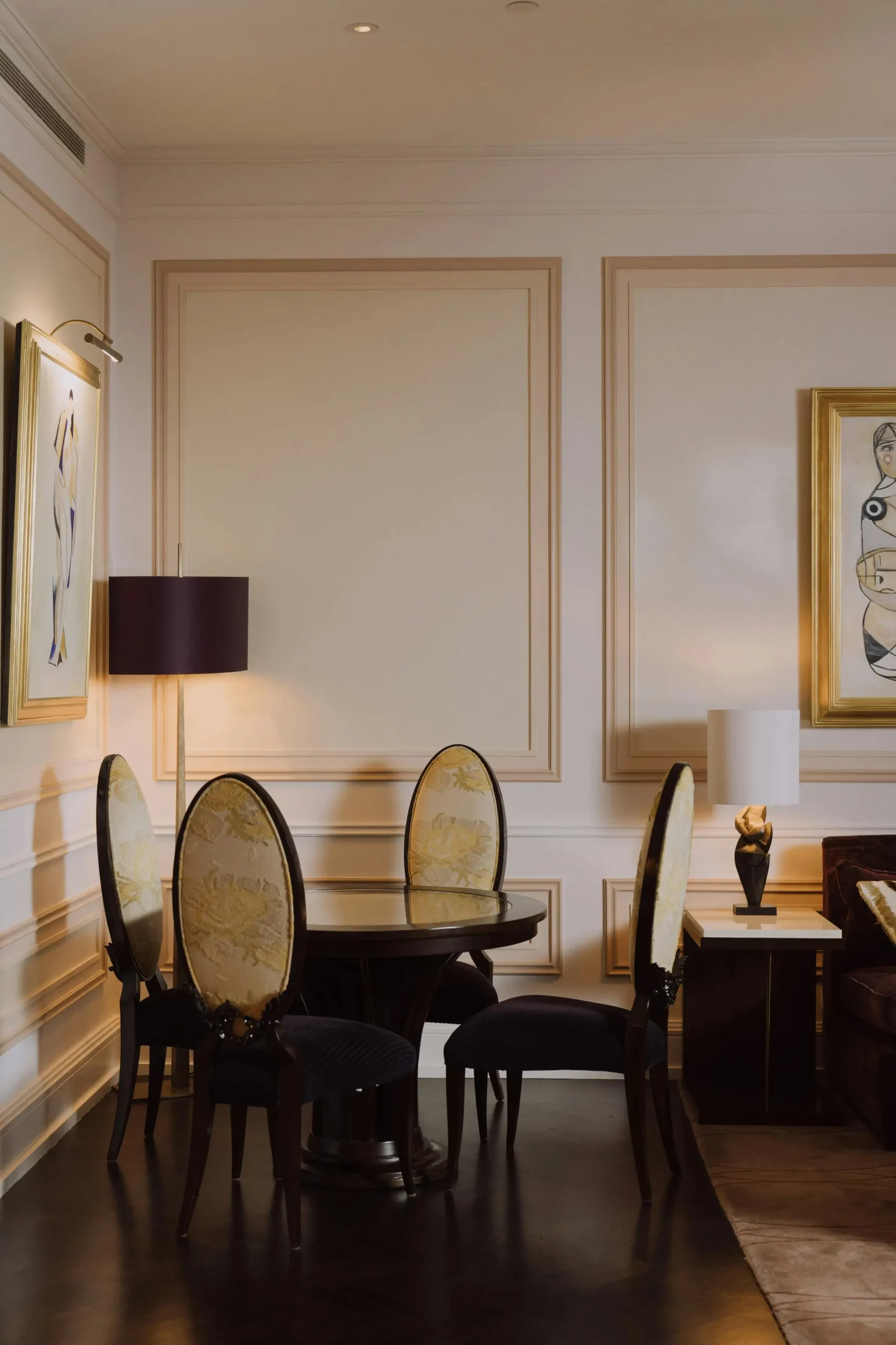
The design is very minimalist and modern – lots of clean lines, neutral colors, no clutter. Some people love this aesthetic, some people find it cold. I’m personally in the “love it” camp because it feels calm and organized, which my brain needs when I’m working and traveling at the same time. Plus, minimalist design usually means less stuff to get dirty or broken, which in turn means rooms tend to be cleaner.
One feature that surprised me: the TV is huge and has streaming capabilities, so I could log into my Netflix account. This is perfect for those rainy Seattle evenings when you just want to order takeout and watch something mindless. Not every hotel has this, and I’ve definitely missed it at other places.
What You’re Paying For (And What You’re Not)
The AC Hotel doesn’t include breakfast in the room rate, which honestly bummed me out at first. I’ve gotten used to places that throw in at least a basic continental breakfast, and not having that does mean you need to budget extra for food.
But here’s the trade-off: the hotel does have a breakfast area where you can buy stuff, and it’s actually good. Like, European-style breakfast with decent pastries and real coffee, not the sad continental breakfast buffet situation you find at a lot of mid-range American hotels. It’s not cheap – probably $12-15 for breakfast – but the quality is there if you want it.
Or, and this is what I usually did, you can just walk two blocks to a coffee shop and get breakfast for less. There are tons of options nearby, and part of the fun of travel is exploring local spots anyway, right?
The hotel has a fitness center that’s small but has the basics – treadmill, some weights, yoga mats. I used it a couple times early in the morning when I needed to shake off the jet lag (okay, there’s no actual jet lag from domestic travel, but you know what I mean – that weird travel grogginess). It’s not fancy, but it’s adequate.
What you’re really paying for is the location, the cleanliness, and the consistency. You know exactly what you’re getting when you book an AC Hotel, and that removes a lot of the anxiety and guesswork from travel planning. For me, that reliability is worth something.
The Money Strategy: When to Book and How to Save
Alright, let’s get into the nerdy travel hacking stuff that I actually get excited about.
AC Hotels are part of the Marriott Bonvoy system, which means if you’re collecting points, this is a good option. I’ll be honest, I was skeptical of hotel loyalty programs for years because they seemed like a scam designed to get you to spend more money. But after accidentally accumulating points across several stays, I’ve actually gotten a few free nights that saved me real money.
If you’re planning multiple trips to Seattle or you travel frequently for work, it might be worth signing up for a Marriott credit card. I know, I know, that sounds like peak credit card hack behavior, but hear me out. The Marriott Bonvoy card gives you points for stays and has no foreign transaction fees, which is useful if you’re traveling internationally. I put all my business expenses on mine and pay it off every month, and the points add up faster than you’d think.
But even without points, there are strategies for getting better rates. I’ve found that AC Hotel Seattle Downtown prices fluctuate pretty dramatically based on what’s happening in the city. During peak summer months or when there’s a big conference or convention, rates can spike to $250+ per night. But during the off-season or midweek, you can find rooms for $120-140.
I use a tool called Google Hotel Price Tracker (you can also do this through the Google Flights interface) to monitor rates for dates I’m interested in. Set up an alert, and it’ll email you when prices drop. I saved about $40 per night once by waiting until two weeks before my trip when a big conference got canceled and suddenly a bunch of rooms freed up.
Also, and this feels obvious but I’m going to say it anyway: weekends are almost always more expensive than weekdays in downtown Seattle. If you have flexibility in your schedule, Sunday through Thursday stays are typically $30-50 cheaper per night than Friday-Saturday. Over a week-long trip, that’s potentially $150-200 in savings.
Who This Hotel Actually Works For
I’ve recommended the AC Hotel Seattle Downtown to a bunch of people at this point, and I’ve learned that it’s not universally perfect for everyone. Let me break down who I think it’s ideal for and who might want to look elsewhere.
Perfect for: Solo travelers who want to be downtown without spending a fortune. The smaller room size doesn’t matter when you’re by yourself, and being centrally located means you can maximize your time exploring. I loved being able to walk back to my room in ten minutes whenever I needed a break from peopling.
Great for: Business travelers or digital nomads who need reliable Wi-Fi and a functional workspace. The desk setup is genuinely good for getting work done, and the internet has been solid every time I’ve stayed there. I took video calls from my room without any connectivity issues.
Works well for: Couples who don’t need a ton of space and value location over square footage. If you’re planning to spend most of your time out exploring Seattle, you don’t need a huge room. You just need somewhere clean and comfortable to sleep.
Maybe not ideal for: Families with kids who need more space or families on a super tight budget where every dollar really counts. The rooms are small for multiple people, and at $140+ per night, you might be better off finding a larger space outside downtown if you’ve got children in tow.
Probably skip if: You’re doing the hardcore backpacker thing and need to keep costs to an absolute minimum. There are hostels and budget motels where you can stay for half the price. The AC Hotel is for when you want budget-friendly, not rock-bottom cheap.
The Realistic Downsides Nobody Mentions
I’m going to level with you about some stuff that bothered me, because I hate when travel blogs only tell you the positive stuff and then you show up and realize there were issues you weren’t prepared for.
The street noise can be significant. You’re downtown in a major city, and you’re going to hear sirens, people talking, cars honking. The windows do an okay job of blocking sound, but if you’re a light sleeper, bring earpacks. I learned this the hard way on my first night when I was awakened at 2 AM by what sounded like an entire bachelorette party walking past.
The hotel doesn’t have much personality. It’s sleek and modern, but it’s also kind of generic. If you’re someone who loves boutique hotels with unique character and local artwork, this might feel a bit soulless. I don’t personally care about this, but I know some travelers really value that sense of place in their accommodation.
Parking is expensive if you have a car. Like $45 per night expensive. This is pretty standard for downtown Seattle, but it’s still annoying. If you’re driving, you might want to look into parking garages nearby that offer daily rates, or honestly, consider whether you even need a car. Seattle’s public transit is good enough that I’ve done entire trips without renting a vehicle.
The lack of included breakfast does add to your daily costs. If you’re used to grabbing free hotel breakfast and then hitting the road, you’ll need to adjust your budget. Figure an extra $10-15 per day for breakfast, or plan to buy groceries and keep snacks in your room.
My Actual System for Booking This Place
Since I’ve now stayed at the AC Hotel Seattle Downtown four separate times, I’ve developed a bit of a system that I want to share because it genuinely saves money.
First, I always check at least three places: the Marriott website directly, Hotels.com, and Booking.com. Prices are usually similar, but occasionally one platform will have a sale or promo code. I once saved $18 per night by booking through Hotels.com when they were running a member discount.
Second, I’m flexible with my dates whenever possible. I use the calendar view to see which nights are cheapest, and I’ve shifted my travel dates by a day or two multiple times to save $50+. If you’re not tied to specific dates, this flexibility is your biggest money-saving tool.
Third, I book in advance when I can. Last-minute deals sometimes happen, but in my experience, downtown Seattle hotels get more expensive as you get closer to your travel date, not less. I try to book 6-8 weeks out when possible.
Fourth, I actually call the hotel sometimes. I know this sounds old-fashioned, but I’ve had luck asking if there are any unadvertised discounts or if they can match a rate I found on another site. It doesn’t always work, but when it does, you can save $10-20 per night. The worst they can say is no.
Why I Keep Coming Back
After four stays at the AC Hotel Seattle Downtown, it’s become my default choice when I need to be in downtown Seattle for more than a day or two. And the reason is simple: it removes the stress and uncertainty from accommodation without completely destroying my budget.
I know what I’m getting every time. The room will be clean, the bed will be comfortable, the Wi-Fi will work, and I’ll be able to walk to most places I need to go. That consistency is valuable when so many other aspects of travel are unpredictable.
Is it the absolute cheapest option in Seattle? No. Could you save money by staying in a hostel or finding an Airbnb in a neighborhood further out? Yes, absolutely. But would you have the same peace of mind, convenience, and quality? That’s the real question.
I’ve learned over eight years of budget travel that sometimes the slightly more expensive option is actually the better value because it lets you enjoy your trip more. When I’m stressed about whether my accommodation is safe, or spending an hour each way commuting to downtown, or dealing with spotty internet that makes it impossible to work, I’m not actually saving money – I’m just making myself miserable.
The AC Hotel Seattle Downtown hits that sweet spot of affordable enough that I don’t feel guilty, nice enough that I’m comfortable, and located perfectly so I can actually enjoy my time in Seattle. And honestly, after all these years of travel, I’ve realized that’s worth paying a bit more for.
So if you’re planning a Seattle trip and you need to be downtown, seriously consider the AC Hotel. Check rates across multiple platforms, be flexible with your dates if possible, and know that you’re getting solid value for your money. Downtown Seattle accommodation doesn’t have to cost $300 a night or require you to sacrifice comfort and location.
And when you’re there, walk down to Pike Place Market early in the morning before the tourist crowds arrive. Grab a coffee, watch the fishmongers throw salmon, and just take in the energy of the city. That’s what you’re really paying for – not just a hotel room, but the ability to experience Seattle without the logistics and accommodation stress getting in the way.
Trust me on this one. Your future self will thank you when you’re comfortably settled in downtown Seattle instead of dealing with a two-bus commute from some sketchy motel on the outskirts.