
Why Kimpton Hotel Vintage Seattle Became My Splurge-Worthy Exception (And How to Actually Afford It)
Flights from Seattle
| Destination | Departure at | Return at | Airline | Find tickets |
|---|---|---|---|---|
| Moscow | 12 April 2026 | 27 April 2026 |  | Tickets from 1 286 |
| Las Vegas | 5 April 2026 | 7 April 2026 |  | Tickets from 142 |
| Honolulu | 1 May 2026 | 10 May 2026 |  | Tickets from 448 |
| Los Angeles | 20 April 2026 | 25 April 2026 | | Tickets from 105 |
| San Francisco | 22 May 2026 | 24 May 2026 | | Tickets from 146 |
| Bangkok | 6 May 2026 | 15 May 2026 |  | Tickets from 980 |
| Phoenix | 22 May 2026 | 26 May 2026 | | Tickets from 216 |
| Houston | 14 April 2026 | 16 April 2026 | | Tickets from 205 |
| Hong Kong | 7 April 2026 | 9 May 2026 |  | Tickets from 815 |
| Istanbul | 22 April 2026 | 26 May 2026 |  | Tickets from 815 |
| New York | 5 May 2026 | 7 May 2026 | | Tickets from 272 |
| Tashkent | 15 April 2026 | 30 May 2026 | | Tickets from 1 241 |
| Albuquerque | 24 April 2026 | 26 April 2026 | | Tickets from 413 |
| Beijing | 20 May 2026 | 3 July 2026 |  | Tickets from 1 298 |
| San Salvador | 18 April 2026 | 3 May 2026 |  | Tickets from 417 |
| Washington | 12 May 2026 | 19 May 2026 | | Tickets from 261 |
| Tokyo | 11 April 2026 | 18 April 2026 | | Tickets from 1 253 |
| Chicago | 1 May 2026 | 4 May 2026 | | Tickets from 268 |
| Denver | 26 April 2026 | 29 April 2026 | | Tickets from 108 |
| El Paso | 5 April 2026 | 12 April 2026 |  | Tickets from 539 |
| San Diego | 14 April 2026 | 16 April 2026 | | Tickets from 211 |
| Alicante | 3 April 2026 | 10 April 2026 |  | Tickets from 1 020 |
| Anchorage | 28 April 2026 | 10 May 2026 | | Tickets from 341 |
| Orlando | 14 April 2026 | 28 April 2026 | | Tickets from 210 |
| Boston | 1 May 2026 | 6 May 2026 | | Tickets from 176 |
| Saint Petersburg | 31 May 2026 | 1 July 2026 | | Tickets from 1 484 |
| Ontario | 16 April 2026 | 18 April 2026 | | Tickets from 201 |
| Charleston | 4 April 2026 | 13 April 2026 | | Tickets from 279 |
| Tampa | 3 April 2026 | 16 April 2026 | | Tickets from 320 |
| Cape Town | 18 May 2026 | 7 June 2026 | | Tickets from 1 360 |
Look, I need to be honest with you right from the start. When I first walked past the Kimpton Hotel Vintage Seattle back in 2019, I literally laughed and kept walking. Me? Staying at a boutique hotel in downtown Seattle? I was the girl who’d spent the previous month sleeping on a stranger’s couch in Portland through a house-sitting app, so the idea of booking anything with the word “hotel” in its name seemed pretty much ridiculous.
But here’s the thing about budget travel that took me years to figure out: sometimes a strategic splurge actually saves you money. I know, I know. That sounds like the kind of justification I’d roll my eyes at too. Trust me, though. Let me tell you about the time I ended up staying at Kimpton Vintage Seattle for less than some hostel beds I’ve paid for, and why it completely changed how I think about “budget” accommodation in expensive cities.
When Cheap Actually Costs More (My Seattle Wake-Up Call)
So there I was, planning my first trip back to Seattle in three years. I’d done the city on the super cheap before, staying in a hostel south of Pike Place Market that cost me $35 a night. Seemed like a win, right? Wrong. That trip ended up costing me way more than I’d budgeted because I hadn’t factored in all the hidden costs of staying far from where I actually needed to be.
Transportation ate up at least $12 daily on buses and the occasional Uber when I was running late. I wasted probably two hours each day just commuting. And honestly, the hostel situation wasn’t even that cheap when I added up all the meals I had to eat out because there was no kitchen access, just a sad microwave that smelled like someone’s fishy disaster from 2015.
The second time I visited Seattle, I decided to try something different. I’d been reading about how Kimpton properties have this reputation for being boutique but accessible, and I started wondering if there was a way to make it work with my budget travel principles. The Vintage Seattle kept popping up in my research because of its location right in the heart of downtown, and I got kind of obsessed with figuring out if I could swing it.
The Real Deal: What You’re Actually Getting
The Kimpton Hotel Vintage Seattle sits right on Fifth Avenue, which is basically the sweet spot of downtown. You’re a five-minute walk from Pike Place Market, and I mean an actual five minutes, not that travel blogger “five minutes” that’s really fifteen. The Space Needle? About a twenty-minute walk or a quick bus ride. The waterfront, Pioneer Square, Capitol Hill – everything’s accessible without burning through your daily budget on transportation.
But location is just the start. What really sold me was discovering all the included perks that would’ve cost me money elsewhere. The morning coffee and tea service isn’t your sad continental breakfast situation. We’re talking quality coffee that I would’ve otherwise spent $5 on at a café. The evening wine hour in the lobby? That’s another $10-15 saved right there, plus I met this couple from Toronto who gave me the best restaurant recommendations I got during the entire trip.
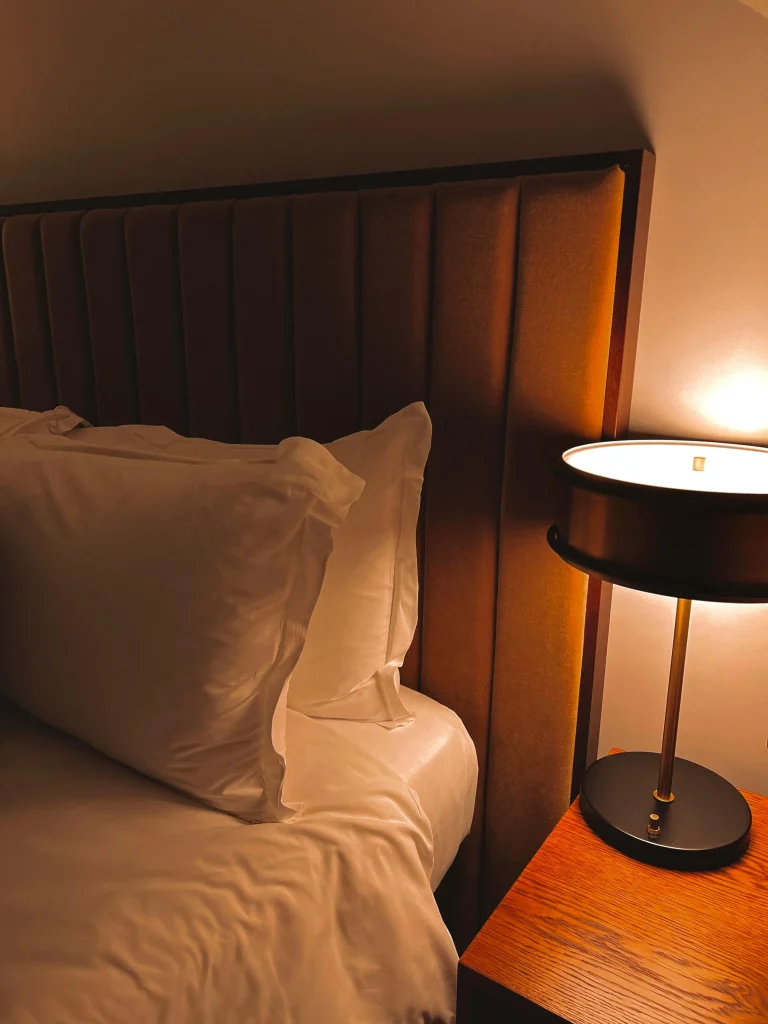
The rooms themselves have this whole wine-country vibe going on, which makes sense given the name. When I finally stayed there, my room had this deep burgundy accent wall and honestly felt more like a stylish apartment than a hotel room. The beds are incredibly comfortable, and after years of sleeping on questionable hostel mattresses and air mattresses at house-sits, I’m not even embarrassed to say I took a photo of myself in that bed like it was a major life achievement.
How I Actually Afforded It (Without Selling a Kidney)
Okay, so here’s where we get into the actual budget travel hacks. The rack rate for Kimpton Vintage Seattle can be anywhere from $200-400+ per night depending on the season, which would absolutely blow my typical daily budget of around $50-75 for accommodation. But I’ve stayed there twice now, and neither time did I pay anywhere close to those numbers.
First strategy: shoulder season is your best friend. I went in early November, right after the fall tourism rush but before the holiday season kicked in. My rate was $127 per night, which is already pretty reasonable for downtown Seattle. But then I remembered that Kimpton is part of IHG’s portfolio, and I’d been sitting on a stash of IHG Rewards points from a credit card signup bonus I’d gotten six months earlier.
Let me back up here because credit card points are honestly one of my favorite travel hacks, and I feel like they’re super underutilized by budget travelers who think they’re only for luxury travelers. I’d opened an IHG Rewards card that had an 80,000-point signup bonus after spending $2,000 in three months. Since I was already spending that money anyway on normal expenses (groceries, gas, my blog hosting fees), it didn’t cost me anything extra. Those points covered two nights completely free, and I only paid cash for the third night at that $127 rate.
The second time I stayed there, I used a different approach. Kimpton has this thing where they occasionally offer “4th Night Free” promotions if you book directly through their website. I combined that with booking during a random Tuesday-to-Friday period in February when Seattle’s not exactly a hot tourist destination. My four-night stay ended up averaging $89 per night after the free night discount. That’s cheaper than many mid-range hotels in the area, and definitely comparable to decent hostels once you factor in all the included amenities.
The Hidden Money-Savers Nobody Talks About
Here’s something I wish I’d known earlier: Kimpton properties have this policy where they don’t charge for basically anything extra. Need to store your bags before check-in or after checkout? Free. Want to borrow a yoga mat or bike? Free. Forgot your phone charger? They’ll lend you one. These might seem like small things, but they add up, especially for budget travelers who are used to getting nickel-and-dimed for every little thing.
The in-room amenities are also legit. Full-size toiletries that you don’t have to feel guilty about using, which means you don’t need to pack your own or buy travel-size bottles. A coffee maker with decent coffee, not that weird single-serving situation that tastes like cardboard. And the free WiFi is actually fast enough to work from, which matters if you’re a digital nomad like me who needs to hop on Zoom calls or upload blog content.
But honestly, the biggest money-saver for me was the location. Being right in the middle of everything meant I could walk pretty much everywhere I needed to go. I probably spent $6 total on public transportation during my three-day stay, compared to the $35-40 I would’ve spent shuttling back and forth from a cheaper hotel in a less central location.
When It Makes Sense (And When It Doesn’t)
Let me be real with you: this isn’t going to work for every trip or every budget traveler. If you’re doing a month-long backpacking trip through multiple cities, you probably can’t justify staying in boutique hotels the whole time. I certainly don’t. But for shorter city stays, especially in expensive cities like Seattle, the math can actually work in your favor.
I use this strategy for what I call “hub stays” – cities where I’m planning to explore intensively for 3-5 days and want a comfortable, well-located base. Seattle fits that perfectly. So does Portland, San Francisco, Chicago. Cities where the geography and public transportation make location really valuable, and where budget accommodation options are either far from the action or not that much cheaper anyway once you factor in the trade-offs.
It doesn’t make sense if you’re rarely going to be in your room or if you’re traveling solo and really want that social hostel atmosphere. And if you’re someone who prefers cooking your own meals to save money, the lack of a kitchen might be a dealbreaker. For me, the equation worked because I was planning to eat out anyway to try Seattle’s food scene, I needed a reliable place to work remotely, and I valued being able to walk everywhere.
My Actual Budget Breakdown
Just so you can see how this actually penciled out for my three-night stay, here’s the real breakdown. Two nights were free with points (value of roughly $250-280), and one night cost $127 plus about $20 in taxes and fees, bringing my total cash outlay to around $147 for three nights, or about $49 per night.
Compared that to my previous Seattle trip where I paid $35 per night for the hostel but spent an extra $36 on transportation and probably another $25 on meals I could’ve avoided with better kitchen access. That “cheap” trip actually cost me more per day when I looked at the total picture. Plus, I was way more productive and enjoyed the city more when I wasn’t exhausted from commuting or dealing with a crammed eight-person dorm room.
I’m not saying everyone should ditch hostels and budget hotels entirely. They absolutely have their place in budget travel, and I still use them plenty. But I’ve learned that sometimes paying a bit more for the right accommodation in the right location actually aligns with budget travel principles better than always choosing the cheapest option.
Actually Booking It Without Getting Ripped Off
If you’re thinking about trying this approach, here are my practical tips. First, sign up for Kimpton’s newsletter and IHG Rewards Club even if you’re not planning to book immediately. They send out pretty regular promotions for bonus points or discounted rates, and sometimes they have flash sales that are genuinely good deals.
Second, be flexible with your dates if at all possible. I use Google Flights’ calendar feature for airfare, but the same principle applies to hotels. If you can shift your trip by even a few days, you might save $50-100 per night. Weekdays are almost always cheaper than weekends in Seattle, and avoiding major events (looking at you, Seafair and Bumbershoot) can make a huge difference.
Third, don’t be afraid to call the hotel directly after you’ve checked online rates. I know this feels old-school, but I’ve gotten better rates by calling than what was available online maybe 30% of the time. Hotels have flexibility that booking sites don’t, and sometimes they’ll match a rate you found elsewhere or throw in extras like free parking or room upgrades.
And look, if the Kimpton Vintage Seattle specifically doesn’t work for your dates or budget, Seattle has several other Kimpton properties that follow the same model and might be cheaper depending on timing. The Kimpton Palladian and the Alexis are both solid options with similar perks.
The Bottom Line from Someone Who Usually Sleeps on Couches
I never thought I’d be the person recommending a boutique hotel to budget travelers, but here we are. The truth is, smart budget travel isn’t about always choosing the cheapest option. It’s about maximizing value and making your money work as efficiently as possible. Sometimes that means a $15 hostel bed. Sometimes it means strategically using points and timing to stay somewhere like Kimpton Hotel Vintage Seattle for less than you’d pay for a mediocre mid-tier hotel.
My advice? Run the numbers for your specific situation. Factor in location, transportation costs, included amenities, and your own travel style. If you’re visiting Seattle for just a few days and want to be right in the heart of things, this could genuinely be your best budget option. And if nothing else, you’ll sleep in a really, really comfortable bed after a long day of exploring. Trust me, your back will thank you.